Retold by Astracia from public sources
Wirecutter began as a slow list Brian Lam did not know how to monetize
Brian Lam says he left Gizmodo after five years to build a short, rarely updated buying list from Hawaii, expecting a hobby, taking about two years before paying himself outside poverty, without stating a New York Times price in these accounts.

- Years at prior job
- 5 years 22 June 2011 goodbye; restated 2016 · founder-reported
- Max articles per month
- 10 Techies Project interview, July 2016 · founder-reported
- Years to non poverty pay
- 2 years Techies Project interview, July 2016 · founder-reported
- Employees
- 60 July 2016 interview · founder-reported
- Reading time
- 6 min
The story
On 22 June 2011, Brian Lam published a four-sentence goodbye at Gizmodo. After five years, he wrote, he was moving on "to play around in the ocean a bit more and figure out what my next adventure is." He thanked readers, said he had fun creating the site, and named Joe Brown as his successor. The note does not mention Wirecutter, affiliate links, or a buyer. It is a departure from a gadget blog, dated in his own byline, not a corporate history of what the list became. The next adventure, in a 2016 first-person interview, is the one he said he could not stand not existing.
Talking to Helena Price for the Techies Project, later carried on Medium, Lam described why people who were not in tech kept asking him the wrong question. He would say he ran one of the biggest tech blogs in the world, and they would still ask which camera, television, or headphones to buy. He often did not know. News about launches, he said, was not the same as a recommendation. The opportunity he saw was a master list: if you needed a $500 television, this was the one. Existing roundups, in his pitch, took about an hour to sort. The Wirecutter would take about two minutes. Saving 95 percent of comparison-shopping time was the promise he made to skeptics, not a measured conversion rate he published.
He had other job offers after Gawker. He wanted to do The Wirecutter anyway. He started small: he Airbnb'd his house, sold a fancy car, bought a cheap truck, and worked on the list. At some point, he said, the idea "just popped" while he was living in Hawaii, trying to balance work and surf. He only expected a hobby. It became an obsession. Hawaii also mattered for a reason that is not a traffic number. Growing up in New Jersey, he said, he had been a minority in a place that felt racist and classist; in Hawaii he did not need to be one. The catalog image of a surf shack is not a sentence he used in these two pages. The cheap truck and the Airbnb are.
The publishing cadence he pitched was a rejection of the blog he had just left. The site would ignore a lot of noise and update at most about 10 times a month. People asked how he would rank on Google, how he would make traffic, how he would make ad money. He said he did not know and did not care. If you were a VC, he added, you probably would not understand why to fund that conversation. Content, he argued, is expensive if it is not garbage, and it does not grow like a free app. High quality needed slow growth incompatible with most tech venture capital. That is his theory of the business. It is not a revenue line.
A launch sponsor, Intel, arrived anyway. God bless them, he said, because he did not think anyone but him understood how little traffic a non-junk cadence would produce. The two-year mark is the only compensation clock he offered. "It took about 2 years before I really could pay myself outside of poverty levels but I didn't need much." He kept borrowing money, lived frugally, and did not want anyone telling him to go faster. Two years to non-poverty pay is a personal wage story. It is not company profit, not affiliate revenue, and not ARR. Borrowing is not a published cap table.
By the time of the interview, in July 2016, he said it would be five years at Wirecutter that fall, matching his five years at Gawker. At Gawker he had been about 35 pounds heavier, unhealthy, unhappy, and stressed. Gizmodo, he said, was not that different from boxing: getting punched in the face every day was actually easier than the job. Internally and externally combative, you burned bridges to get the story fast. He liked that. He liked helping people more, which is why he left to do Wirecutter. Gym years, including a shooting he witnessed, are how he explained leaving a conflict-first life, not a product metric.
Staff, when asked how many people he was paying regularly, came to "roughly 60, plus freelancers." He added that people sometimes thought it was still just him. Sixty is a payroll-band claim from mid-2016, founder-reported, not a headcount at launch and not a New York Times integration figure. The metric he said he cared about was sessions, because sessions reward new people and returners, and returners were a quality signal. After people trusted the work, he said, they often read only the first 30 seconds, then bought the recommendation. That is a reading-behavior claim, not GMV, not affiliate revenue, and not a take rate.
Mission language in the same interview refuses the usual media scoreboard. They were not there to make traffic, be a big media company, or be fancy. Shopping, he said, sucks except for the few categories you love; Wirecutter existed for the rest. Dropping a link in front of a stuck friend was the satisfying move. He estimated work took 80 or maybe 90 percent of his energy, which he contrasted with friends in Hawaii. Those percentages are how he felt about his calendar, not revenue splits. A long peeler article, he suggested, may be the wrong object after trust exists. That peeler is an example product, not a business result.
The catalog Wirecutter card ends in a New York Times purchase for about $30 million. That price does not appear in Lam's Gizmodo goodbye or in the 2016 Techies interview, which sat before the later sale in public chronology. This record therefore does not treat a Times acquisition, a $30 million figure, or third-party e-commerce GMV as founder-stated facts. Catalog original URL thewirecutter.com/blog/the-wirecutter-story/ returned 404. What Lam did state is five years at Gizmodo, a hobby that became a list, a 10-posts-a-month ceiling, two years to pay himself above poverty, Intel as launch sponsor, roughly 60 people plus freelancers, and sessions as the metric that matched the mission.
The editorial job is to leave the buyer out until the founder puts the buyer in. A recommendation list that publishes slowly can still be a company with a payroll. A payroll is not proof of affiliate yield. A later newspaper owner is not implied by a 2011 ocean goodbye. Lam's own sequence is leave the combative blog, fund a sparse list with house and car, refuse venture speed, and measure return visits. If a later sale exists in other people's articles, those articles can stay in their own pile. This one stays with the sentences he signed.
Read the primary source behind this editorial account.
Read the original source ↗Sources
More founder stories



Alternatives to The Wirecutter
Browse category →Reviewed matches are labeled. Other suggestions come from a shared subcategory, use case, source listing or the same category. Compare features and current plans before choosing.
| Product |
|---|
EnfinnitIndependent VPN testing platform with real-world performance analysis, reviews, and comparison tools. |
Best ReviewsBest Reviews guides you to the best products and services through expert-written and user reviews. |
Disrupted: My Misadventure in the Start-up Bubble by Dan LyonsVeteran journalist takes a job in GenY-oriented high tech |
WistiaHost, manage, and track your videos with the best video marketing tools in the (known) universe. |
WhappextWhappext is an online marketing platform that helps users to send bulk messages to millions of users for the marketing of their brands. |
AdsLibraryAdsLibrary Discovery: Most Complete Ad Library |
Campaign MonitorEmail marketing software built for designers and their clients to run successful email campaigns. |
CC SearchThe public beta of a new Creative Commons search tool, meant for testing and feedback. For the legacy search tool, please visit search.creativecommons.org. |







More in Marketing & Content
Browse category →Selected by category and available use-case details. A topic match does not establish equivalent features.
| Product |
|---|
eBrandzeBrandz offers digital marketing and search engine optimization services. |
Maker Audience ListReach over 7,000 successful tech founders and makers. |
WaitlistedWaitlisted helps new brands and startups build an audience while they focus on building a product |
TyporaA minimal Markdown reading & writing app. |
DareBoostDareBoost is an online tool to test, analyze and monitor your website: speed, SEO, quality, security. All you need for website optimization in a single service. |
PubliiOpen Source CMS for Static Websites |






Recently added in Marketing & Content
Browse category →Added to this directory in the past 30 days. Dates refer to the directory listing, not the product launch.
| Product |
|---|
UnfencedLand for sale that borders public land |
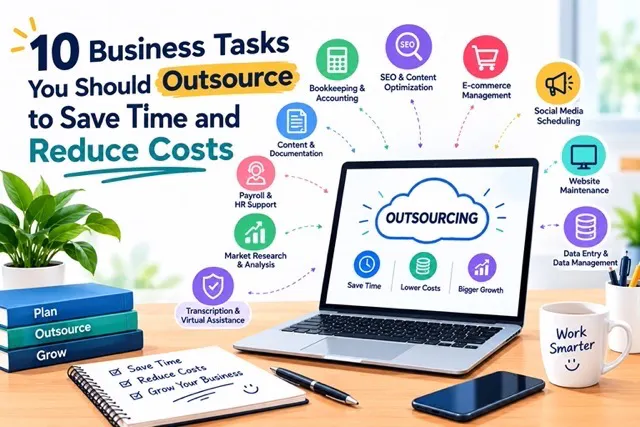
GostravoHow Small Businesses Can Reduce Costs Through Outsourcing |
LaunchGPpromote their tool 32 products line up every Monday, votes set the order, and the podium keeps a permanent dofollow backlink. |
CroevoAIYour game idea, built from a sentence. |



Explore expertise in Marketing & Content
See all →Profiles grouped by topic. This does not confirm an offer, availability or a connection to this profile.
| Profile |
|---|
mzackarrya-stackBuilding Growtoria - an AI-native growth agency and free tools for B2B founders and freelancers. |
SaaS ReportYouTube · 1K subscribers |
Edward SturmSEO, digital marketing, organic social media marketing, growth hacks, and founder stories. |
Media about Marketing & Content
See all →Shows and channels grouped by topic. A recommendation does not mean this profile was featured or endorsed.
| Show |
|---|
Marketing ChroniclesNewsletter |
Eli FinerNewsletter · Eli Finer |
Finding ConnectionNewsletter · ✨ J A N E ✨ |
Browse Marketing & Content categories
See all →Subcategories in the same part of the directory, with the number of listed products.
| Category |
|---|
SEO & search visibility7,493 listed products |
Social media & influencer marketing1,533 listed products |
Writing & copywriting1,455 listed products |
Email & newsletter marketing1,169 listed products |
Content marketing & CMS840 listed products |
Advertising & campaign management581 listed products |
Reputation & review management487 listed products |
Conversion optimization444 listed products |
More founder stories from Marketing & Content startups
See all →Other retold founder accounts, each linked to the original.
| Story |
|---|
Cypress: A Frustrated Atlanta Developer, Fifteen Months Without Salary, and 45 Days of Runway Before Testing Got Its "Wow" MomentIn 2014 Brian Mann, an Atlanta developer known for his BackboneRails screencasts, quit his job out of frustration with flaky, server-based browser testing built around Selenium. He made the first commit on Cypress on Jun |
Grammarly: The Ukrainian Founders Who Went From Catching Plagiarism to Asking Why Students Copy in the First PlaceGrammarly was started in 2009 by Max Lytvyn, Alex Shevchenko and Dmytro (Dima) Lider, three Ukrainian-born entrepreneurs who had previously built MyDropBox, a plagiarism-detection service sold to Blackboard. Wondering wh |
Wistia: How Two Brown Graduates Built a Business Video Platform, Over-Scaled, and Took On $17.3 Million in Debt to Stay IndependentWistia was founded in 2006 in the Boston area by Chris Savage, a film major, and Brendan Schwartz, a computer engineer, both Brown University graduates. After a failed filmmaking competition idea and an artist portfolio |
Amplitude: The Voice-Texting App That Failed, and the Analytics Tool Built to Find Out WhyAmplitude was started by Spenser Skates and Curtis Liu, MIT friends who met through the Battlecode programming competition. After Skates spent a year in finance and Liu a year at Google, they built Sonalight, an Android |